Hepatitis A
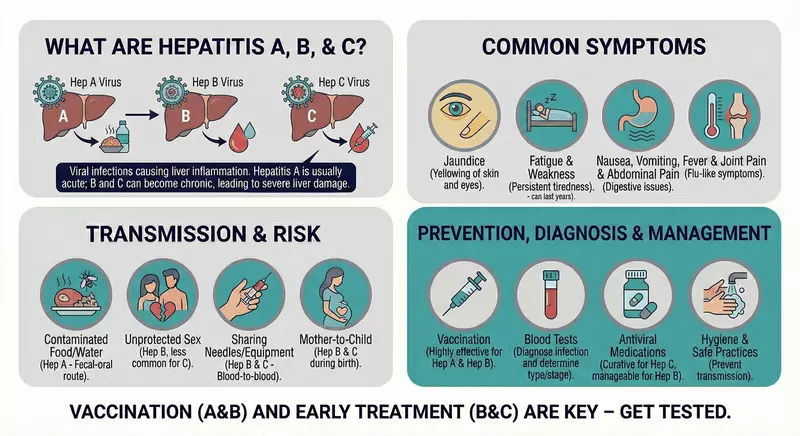
Hepatitis means inflammation of the liver. The most common viral types are Hepatitis A, B and C, and they differ in how they spread and the long-term risks. Hepatitis A is usually caught from contaminated food or water and causes an acute (short-term) illness. Hepatitis B and Hepatitis C are mainly spread through blood (and B can also spread through sex), and they are more likely to become chronic (long-term) infections that can damage the liver over many years. Understanding the difference matters because prevention and follow-up are different for each.
What Is Hepatitis A?
Hepatitis A is a viral infection that causes inflammation of the liver. It can make you feel extremely unwell and wiped out for weeks, sometimes months. The good news is that Hepatitis A does not usually become chronic. Once you recover, there are typically no long-term effects, and you develop lifelong immunity.
How Hepatitis A Is Caught
Hepatitis A is most commonly contracted through the faecal–oral route, usually via:
-
Contaminated food or water
-
Poor hand hygiene (particularly after using the toilet and before preparing food)
It can also be passed on through certain sexual practices, particularly oral–anal contact (“rimming”), which is why Hepatitis A vaccination is recommended for many people in higher-risk sexual networks, including men who have sex with men (MSM).
Risk is also increased by travel to regions where Hepatitis A is more common, and by exposure through food preparation in certain settings.
Incubation Period
The incubation period (time from infection to symptoms) is typically 15 to 45 days. This longer window can make it difficult to identify exactly when or where the infection occurred.
Importantly, people are often infectious before they feel unwell, which is why outbreaks can spread quickly.
Symptoms of Hepatitis A
Many people have no symptoms, especially children. Most children and around 50% of adults may have mild symptoms or none at all.
When symptoms occur, they may start like a flu-like illness, including:
-
Fever and general malaise
-
Tiredness and extreme fatigue
-
Muscle or joint pains
-
Loss of appetite
-
Nausea and vomiting
-
Discomfort or pain in the right upper abdomen (where the liver sits)
As the illness progresses, some people develop jaundice (yellowing of the skin and eyes), dark urine, and pale stools.
Symptoms can last several weeks, and in some cases up to three months, with fatigue being the symptom that most often lingers. Even when the liver is recovering, energy levels can take time to return.
How Serious Is Hepatitis A?
Hepatitis A can be very debilitating, but in most healthy adults, it resolves fully. Severe complications are uncommon, but the risk can be higher in:
-
Older adults
-
People with existing liver disease
-
Those with significant alcohol-related liver strain
If you suspect Hepatitis A, medical assessment is important, particularly if you develop jaundice, severe abdominal pain, confusion, or dehydration.
Testing and Diagnosis
Hepatitis A is diagnosed with a blood test that looks for markers of recent infection. Liver function tests are often checked at the same time to assess inflammation.
If Hepatitis A is suspected, we may also discuss:
-
Recent travel
-
Food exposure
-
Sexual exposure (including oral–anal contact)
-
Household contacts, because close contacts may need protection
Treatment
There is no specific antiviral treatment for Hepatitis A. Care is supportive and focuses on:
-
Rest and recovery
-
Hydration
-
Managing nausea
-
Avoiding alcohol (to reduce strain on the liver)
Most people recover fully with time. Because it can take weeks to regain normal energy, we often advise a gradual return to work, exercise, and normal routine.
Lifelong Immunity After Infection
After recovery, your immune system develops lifelong immunity, meaning you are very unlikely to get Hepatitis A again.
Hepatitis A Vaccine
There is an effective Hepatitis A vaccine, and vaccination is the best prevention.
We commonly recommend it for:
-
Men who have sex with men (MSM)
-
Travellers to countries where Hepatitis A is more prevalent
-
People at risk through occupational exposure
-
Food handlers / food preparation workers in some settings
-
People with chronic liver disease (where any hepatitis infection can be more serious)
The vaccine is usually given as a course, and protection is long-lasting. We can advise on timing based on travel dates or individual risk.
Reducing Risk of Infection
Practical ways to reduce risk include:
-
Good hand hygiene, especially after using the toilet and before eating
-
Avoiding untreated water or high-risk foods when travelling
-
Safer sex practices, particularly when oral–anal contact is involved
-
Vaccination if indicated
When to Seek Medical Advice
You should consider an assessment if you have:
-
Flu-like illness followed by jaundice
-
Persistent nausea and severe fatigue
-
Recent travel or known exposure
-
A partner or close contact diagnosed with Hepatitis A
-
Symptoms after oral–anal sexual contact
Early testing provides clarity and helps protect others, particularly household and sexual contacts.
Confidential Care in Canary Wharf
At our private clinic in Canary Wharf, we offer:
-
Hepatitis A blood testing and liver function testing
-
Vaccination advice and Hepatitis A vaccination
-
Sexual health screening where appropriate
-
Travel health guidance and catch-up vaccination planning
If you’re concerned about symptoms, exposure, or vaccination, we provide sexual health advice to you quickly and discreetly.
Stay up to date with the latest health news and insights from around the world.
Stay up to date with the latest health news and insights from around the world. From medical breakthroughs to public health updates, we bring you trusted information to help you stay informed and make confident decisions about your health.





Our professional standards
We are an award-winning private medical clinic with a strong reputation for delivering professional, compassionate and evidence-based healthcare.
Our clinicians maintain appropriate professional registrations and memberships relevant to their roles.
Dr Wayne Cottrell, MBChB, MRCGP, is registered with the General Medical Council and is a member of the Royal College of General Practitioners and the British Association for Sexual Health and HIV (BASHH).
Our nursing team also holds relevant professional memberships, including the Royal College of Nursing (RCN).
Cyberdoc Medical Limited is registered as Dr Cottrell’s designated body for professional appraisal and revalidation.