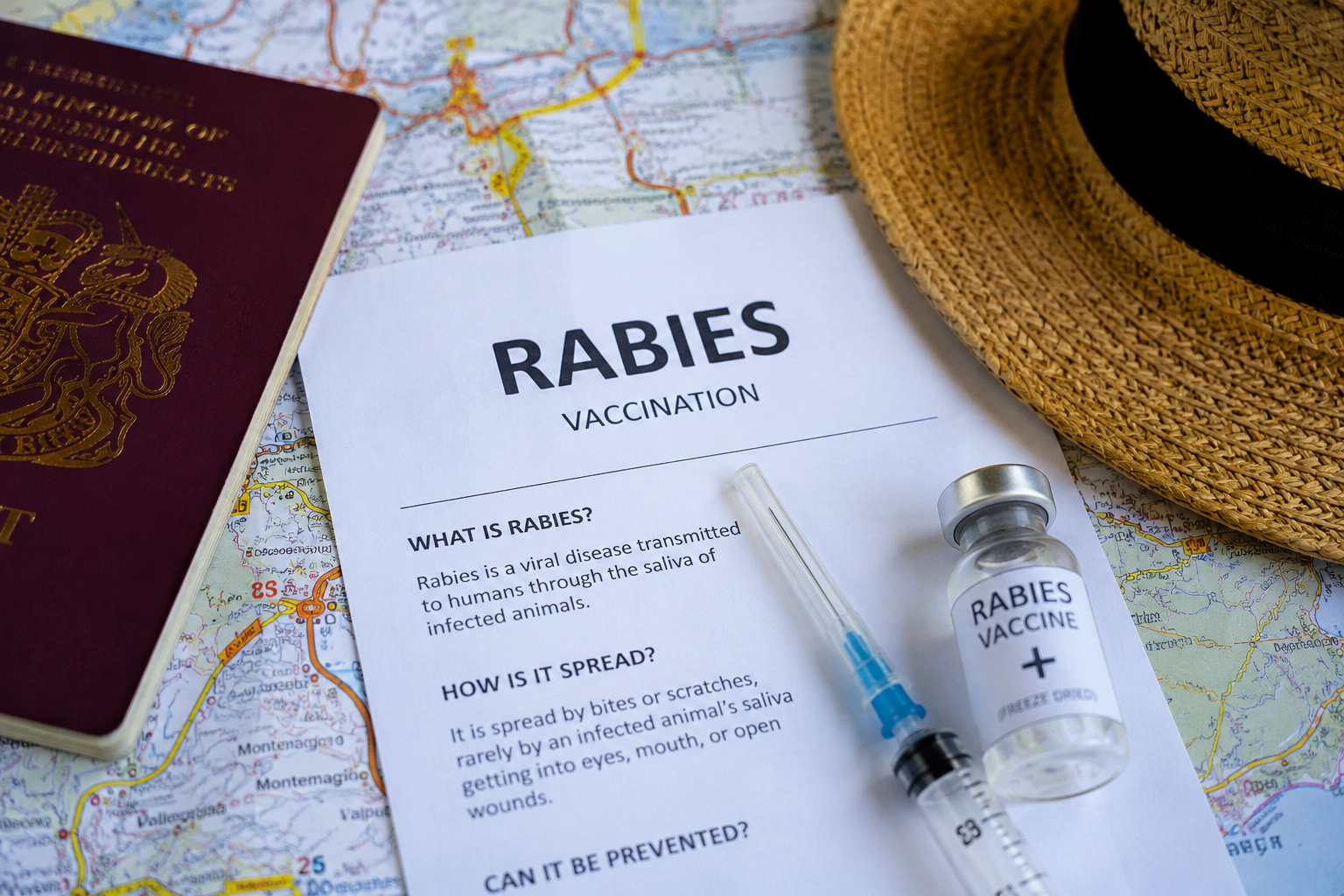
Rabies is not usually the first thing people think about when planning a holiday. Flights, hotels, passports and travel insurance tend to come first. But if you are travelling to Thailand, Bali, India or parts of Africa, it is worth understanding your rabies risk before you leave the UK.
The important thing to know is that not every traveller needs a rabies vaccination. Whether it is recommended depends on where you are going, how long you will be away, what you plan to do and how quickly you could access appropriate medical treatment if you were bitten or scratched by an animal.
What is rabies?
Rabies is a viral infection affecting the brain and nervous system. It is usually transmitted through the saliva of an infected mammal, most commonly following a bite or scratch.
Dogs are responsible for many human rabies infections worldwide, but cats, monkeys and bats can also carry the virus. Rabies is preventable if appropriate treatment is given promptly after exposure, but once symptoms develop it is almost always fatal.
This is why travellers should take even a seemingly minor animal bite or scratch seriously.
Do I need a rabies vaccine for Thailand?
Rabies is present in Thailand and has been reported in domestic animals. Travellers should avoid contact with dogs, cats, monkeys and other mammals, even in busy tourist areas.
Pre-travel rabies vaccination may be particularly worth considering if you are:
- Staying in Thailand for an extended period
- Backpacking or travelling around several regions
- Visiting rural or remote areas
- Cycling, running, hiking or camping
- Working with animals
- Travelling with children
- Likely to be somewhere where prompt medical treatment may be difficult to access
For someone spending a short period in a major resort with ready access to medical care, the recommendation may be different. This is why an individual travel-health assessment is more useful than simply asking whether Thailand “requires” the vaccine.
Do I need a rabies vaccine for Bali?
Bali is part of Indonesia, where rabies is a recognised travel-health risk.
One practical concern in Bali is the amount of animal contact that can occur in areas popular with visitors. Dogs are common, while monkeys are part of the tourist experience at several temples and attractions.
It is best not to feed, stroke or handle monkeys, dogs or cats, however tame they may appear. A playful animal can bite or scratch very quickly.
Travellers spending longer periods in Bali, visiting more remote parts of Indonesia or expecting regular animal exposure should discuss pre-travel vaccination with a healthcare professional.
Do I need a rabies vaccine for India?
Rabies remains an important consideration for travellers to India. Your risk will again depend on the type of trip rather than simply the country name.
Someone staying for several weeks, visiting family, travelling extensively, working outdoors or spending time in areas where immediate medical care may not be available may be advised to have pre-exposure vaccination.
Current issue travellers should be aware of: In February 2026, TravelHealthPro reported that falsified rabies vaccine had been identified in India. Travellers receiving rabies vaccination or post-exposure treatment abroad should use recognised healthcare providers and keep records of any vaccine administered.
What about rabies vaccination for Africa?
There is no single answer for “Africa” because the continent includes more than 50 countries with very different rabies risks and healthcare infrastructure.
Rabies is present in several African countries. For example, TravelHealthPro identifies rabies risk in countries including Kenya, South Africa and Zimbabwe.
Your individual circumstances matter enormously.
A two-week stay in a city hotel can present a very different risk from volunteering with animals, travelling overland, going on an extended safari or visiting rural communities far from medical facilities.
Before travelling, check the advice for the specific countries and regions on your itinerary rather than treating Africa as a single destination.
Does having a rabies vaccine mean I am fully protected?
This is one of the most important points.
No.
Pre-travel vaccination provides valuable protection and can simplify treatment if you are subsequently exposed to rabies, but it does not mean that a bite or scratch can be ignored.
If you are bitten, scratched or have potentially infectious animal saliva come into contact with broken skin, you should seek urgent medical advice even if you were vaccinated before travelling.
Pre-exposure vaccination can simplify and shorten post-exposure treatment and may remove the need for rabies immunoglobulin, which can be difficult to obtain in some parts of the world.
What should I do if an animal bites or scratches me abroad?
Act FAST.
Wash the area thoroughly with plenty of soap and running water. Clean it carefully and seek medical attention as soon as possible.
Do not wait to see whether the animal becomes ill and do not wait until you return to the UK.
Tell the healthcare professional whether you received rabies vaccinations before travelling and take your vaccination record with you if possible.
Even very small scratches should be assessed if they came from a potentially infected mammal.
Are children more at risk?
Rabies vaccination can be particularly important to discuss when travelling with children.
Children may be more likely to approach or play with animals and may not recognise the significance of a small bite or scratch. A child may also fail to tell a parent that an animal scratched them.
If you are taking children to a rabies-risk destination, make sure they understand not to stroke, feed or pick up unfamiliar animals.
When should I arrange a rabies vaccination?
Ideally, seek travel-health advice around four to six weeks before departure. However, if your plan is shorter than this, it is still worth arranging an appointment.
Rabies vaccine schedules can vary according to the vaccine being used and your individual circumstances, so your clinician can advise what is achievable before you travel.
Rabies vaccinations in London
If you are travelling to Thailand, Bali, India, Africa or another rabies-risk destination, a travel-health consultation can help determine whether vaccination is appropriate for your particular trip.
At Dr Wayne Cottrell & Co in Canary Wharf, we can review your itinerary, length of stay, planned activities and medical history before recommending appropriate travel vaccinations.
Where rabies vaccination is advised, we can also explain what to do if you are bitten or scratched while abroad, because knowing how to respond after an animal exposure is just as important as preparing before you travel.