Hepatitis C
Hepatitis C is a viral infection that affects the liver. Unlike Hepatitis A, which causes a short-term illness, and Hepatitis B, which has a vaccine, Hepatitis C often becomes chronic if untreated and can lead to progressive liver damage over time.
The important difference today is that Hepatitis C is now curable in the vast majority of cases with modern antiviral medication. Early testing and treatment prevent long-term complications such as cirrhosis and liver cancer.
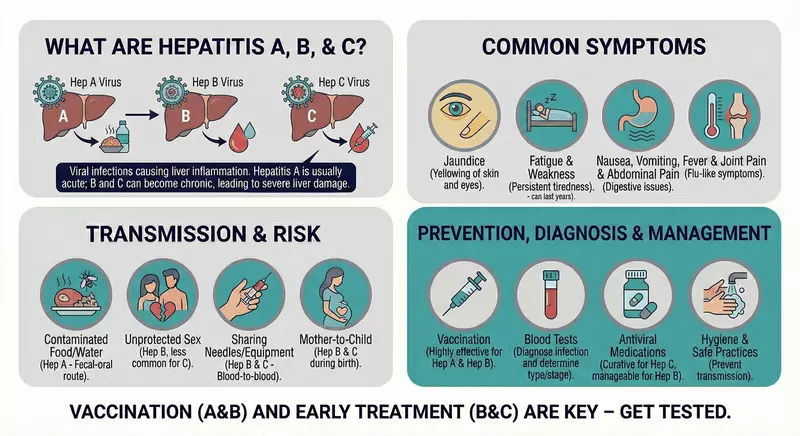
Hepatitis A, B and C – Understanding the Difference
Although all three viruses affect the liver, they behave differently:
-
Hepatitis A is usually transmitted via contaminated food or water and causes a short-term illness. It does not become chronic.
-
Hepatitis B spreads through blood and sexual contact, and can become chronic. A vaccine is available.
-
Hepatitis C is primarily spread through blood exposure and frequently becomes chronic if untreated. There is no vaccine, but a highly effective treatment is available.
Understanding which virus is involved determines testing, vaccination, and long-term management.
How Hepatitis C Is Transmitted
Hepatitis C is transmitted mainly through blood-to-blood contact.
Common routes include:
-
Sharing needles or injecting equipment
-
Non-sterile tattooing or piercing
-
Blood transfusions before routine screening (prior to the early 1990s in the UK)
Sexual transmission is less common than with Hepatitis B, but it can occur, particularly in:
-
Men who have sex with men (MSM), especially where there are other STIs
-
Individuals engaging in traumatic sexual practices
-
Those with HIV
Transmission from mother to baby during pregnancy is possible but uncommon.
Hepatitis C is not spread through casual contact, kissing, hugging, or sharing food.
Symptoms of Hepatitis C
Hepatitis C is often called a silent infection because many people have no symptoms for years.
Acute Infection (First 6 Months)
Some individuals develop mild symptoms shortly after infection, including:
-
Fatigue
-
Nausea
-
Loss of appetite
-
Mild abdominal discomfort
-
Jaundice (rare in early infection)
However, most people do not realise they have been infected at this stage.
Chronic Hepatitis C
If the virus remains in the body beyond six months, it is considered chronic Hepatitis C.
Approximately 70–80% of people with acute infection will go on to develop chronic infection if untreated.
Chronic Hepatitis C may remain symptom-free for many years while slowly causing liver inflammation and scarring.
Over time, this can lead to:
-
Liver fibrosis (scarring)
-
Cirrhosis
-
Liver failure
-
Hepatocellular carcinoma (liver cancer)
Because symptoms often appear only when significant liver damage has occurred, testing is essential.
Who Should Be Tested?
Hepatitis C testing is recommended if you:
-
Have you ever injected drugs (even once)
-
Had a blood transfusion before 1991 in the UK
-
Received medical treatment in a country with higher Hepatitis C prevalence
-
Have HIV
-
Have unexplained abnormal liver function tests
-
Are part of higher-risk sexual networks
Routine screening may also be recommended as part of comprehensive STI testing.
Testing for Hepatitis C
Hepatitis C is diagnosed with blood tests.
Testing usually involves:
Antibody Test
Detects whether you have ever been exposed to the virus.
PCR (RNA) Test
If antibodies are present, this test confirms whether the virus is currently active in your bloodstream.
If active infection is detected, further tests assess:
-
Viral load
-
Liver function
-
Degree of liver fibrosis
Early diagnosis significantly improves outcomes.
Treatment – Hepatitis C Is Now Curable
One of the most important advances in modern medicine is the development of direct-acting antiviral (DAA) therapy.
These medications:
-
Are taken orally
-
Usually last 8–12 weeks
-
Cure over 95% of cases
-
Have minimal side effects for most people
Cure means the virus becomes undetectable and does not return, provided there is no reinfection.
This is very different from HIV or Hepatitis B, which require long-term management.
Why Early Treatment Matters
Treating Hepatitis C early:
-
Prevents progression to cirrhosis
-
Reduces liver cancer risk
-
Protects overall liver health
-
Prevents onward transmission
The earlier treatment begins, the better the long-term outcome.
Hepatitis C and the LGBTQ+ Community
While Hepatitis C has historically been associated with injecting drug use, sexual transmission has become increasingly recognised in some MSM networks, particularly where:
-
There are concurrent STIs
-
Condomless anal sex occurs
-
There is exposure to blood
Routine screening in higher-risk groups supports early detection and reduces transmission.
Living With Hepatitis C
Many people diagnosed with Hepatitis C feel anxious about long-term liver damage. The key points are:
-
It is now curable in most cases
-
Treatment is short and well-tolerated
-
Early diagnosis prevents complications
-
Regular monitoring ensures liver protection
Even after a cure, those with advanced fibrosis may require ongoing liver surveillance.
Preventing Hepatitis C
There is currently no vaccine for Hepatitis C.
Prevention strategies include:
-
Avoiding sharing needles or injecting equipment
-
Ensuring sterile tattooing or piercing
-
Safer sex practices in higher-risk contexts
-
Routine screening where appropriate
Public health efforts aim to eliminate Hepatitis C as a major health threat in the coming decades.
When Should You Seek Medical Advice?
You should consider testing if:
-
You are unsure of past risk
-
You have abnormal liver blood tests
-
You are living with HIV
-
You have had potential blood exposure
-
A partner has been diagnosed
Because the infection can remain silent for years, testing provides reassurance and protects long-term health.
Confidential Hepatitis C Care in Canary Wharf
At our private clinic in Canary Wharf, we provide:
-
Hepatitis C antibody and RNA testing
-
Liver function assessment
-
Risk evaluation and counselling
-
Referral for antiviral treatment where indicated
-
Ongoing liver health monitoring
Our approach is discreet, supportive, and evidence-based.
Protecting Your Liver Health
Hepatitis C is a serious infection if untreated, but it is now one of the few chronic viral infections that can be cured. Early detection and treatment prevent long-term liver damage and protect future sexual health.
If you would like testing or have concerns about past exposure, a confidential assessment is available.
Stay up to date with the latest health news and insights from around the world.
Stay up to date with the latest health news and insights from around the world. From medical breakthroughs to public health updates, we bring you trusted information to help you stay informed and make confident decisions about your health.





Our professional standards
We are an award-winning private medical clinic with a strong reputation for delivering professional, compassionate and evidence-based healthcare.
Our clinicians maintain appropriate professional registrations and memberships relevant to their roles.
Dr Wayne Cottrell, MBChB, MRCGP, is registered with the General Medical Council and is a member of the Royal College of General Practitioners and the British Association for Sexual Health and HIV (BASHH).
Our nursing team also holds relevant professional memberships, including the Royal College of Nursing (RCN).
Cyberdoc Medical Limited is registered as Dr Cottrell’s designated body for professional appraisal and revalidation.