
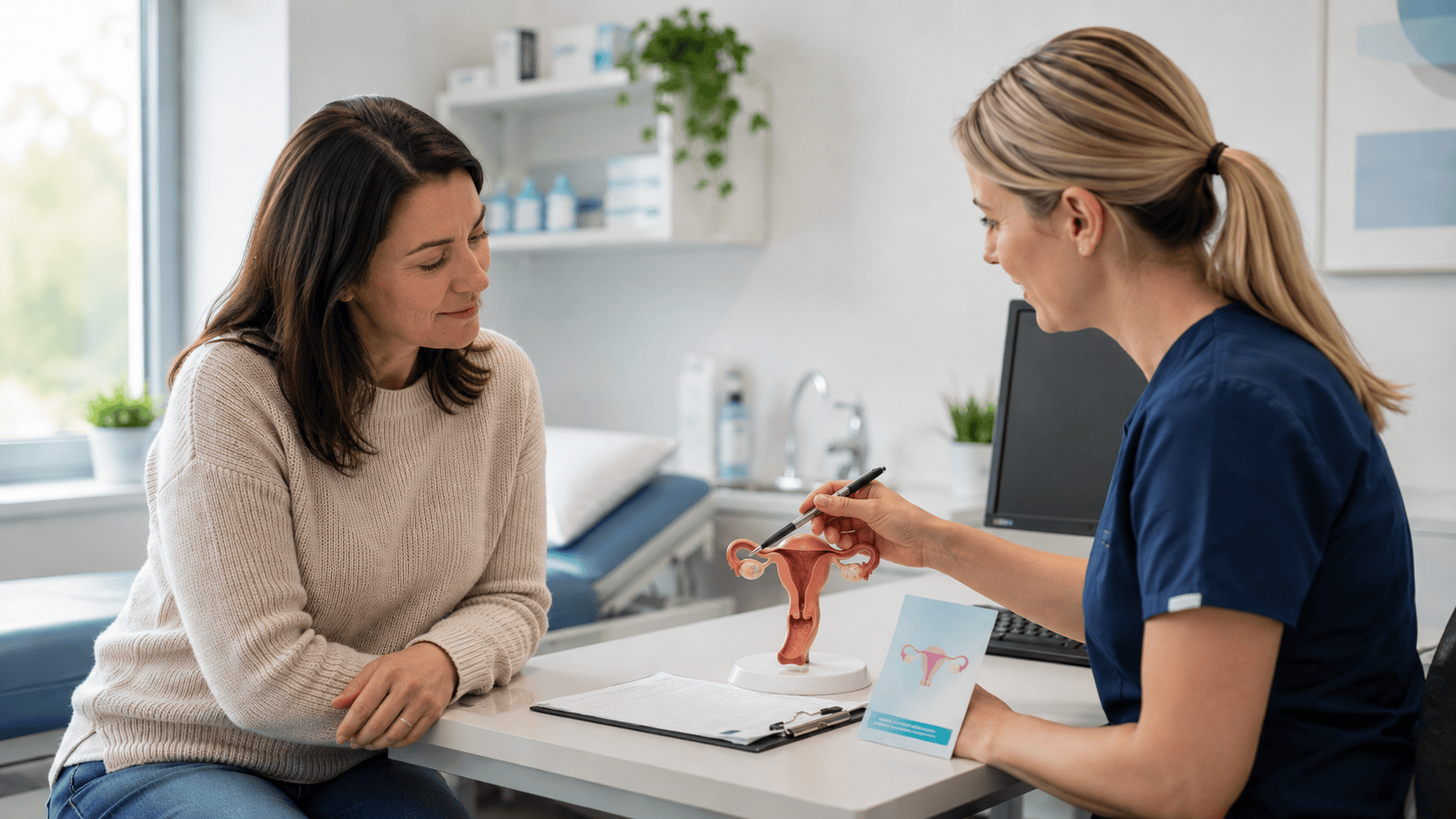
Having a contraceptive coil removed is usually a straightforward procedure, but it is completely understandable to have questions beforehand.
Will it hurt? How long does removal take? What happens to your periods afterwards? And, importantly, how quickly can you get pregnant after coil removal?
Whether you have a copper coil (IUD) or a hormonal coil (IUS), a trained doctor or nurse normally carries out the removal, and it can be done at any time.
Here is what you can expect.
What is the difference between an IUD and an IUS?
The word “coil” is commonly used to describe two types of intrauterine contraception.
The copper coil, also called an intrauterine device or IUD, does not contain hormones. It releases copper into the womb to prevent pregnancy.
The hormonal coil, also known as an intrauterine system (IUS), releases a progestogen hormone into the womb.
Both are long-acting methods of contraception and are highly effective, but neither has to remain in place for its full lifespan. If you want your coil removed earlier, you can discuss this with a trained healthcare professional.
You can read more about the different types of coil on the NHS contraception website.
Why might I want my coil removed?
There are many reasons you may decide it is time to have your coil removed.
You may:
- Want to try for a baby
- Want to change to another form of contraception
- Be experiencing unwanted side effects
- Have reached the replacement date for your coil
- No longer need contraception
- Want a new coil fitted
- Be reviewing contraception as you approach menopause
Whatever the reason, you do not normally have to wait until the coil reaches the end of its recommended lifespan before having it removed.
What happens during coil removal?
Coil removal is usually considerably quicker than having a coil inserted.
You will normally lie on an examination couch. You’ll be asked to lie in a similar position to when you have a cervical screening test.
A speculum is gently inserted into the vagina, giving the clinician a view of the cervix. The fine threads attached to the coil are then located and gently pulled. The arms of the device fold upwards as it passes through the cervix and out of the womb.
A trained doctor or nurse can remove an IUD or IUS.
For most people, the actual removal itself is very quick.
Does coil removal hurt?
This is one of the most common questions patients ask.
For many women, coil removal is easier and less uncomfortable than coil insertion. NHS sexual health guidance notes that removal is often quicker, easier and less painful than insertion.
You may experience a short cramp or pulling sensation as the coil passes through the cervix.
Individuals experience pain differently, so it is difficult to predict exactly what your experience will be like.
If you are particularly worried about discomfort, have previously found gynaecological examinations painful, or have experienced difficulties with a previous coil procedure, tell your clinician before your appointment. This allows you to discuss your concerns and what can be done to make the procedure as comfortable as possible.
What if the coil threads cannot be found?
Sometimes the threads cannot easily be seen during a routine examination.
This does not automatically mean that something is wrong.
The threads may simply have moved higher into the cervical canal or womb. In this situation, further assessment may be required before removal.
Occasionally, removal may therefore be more complicated than the standard procedure and a referral or specialist technique may be needed.
Your clinician can explain the next steps if the coil cannot be removed easily.
Will I bleed after having my coil removed?
Some people experience light bleeding, spotting or mild cramping following removal.
Your menstrual pattern afterwards will depend partly on which type of coil you had and what your periods were like before it was fitted.
For example, a hormonal coil can make periods lighter or stop them altogether while it is in place. Once it has been removed, your natural menstrual cycle may gradually return.
If you experience symptoms after removal that concern you, particularly significant pain or unusual bleeding, you should seek medical advice rather than assuming it is simply part of the removal process.
When can I get pregnant after coil removal?
Potentially straight away.
There is no required waiting period after the removal of either a copper IUD or hormonal IUS before trying for a pregnancy.
The NHS advises that it is possible to become pregnant as soon as an IUD or IUS has been removed.
With a copper IUD, fertility returns to previous levels straight away after removal.
Therefore, if you are having your coil removed because you would like to start a family, you may be able to begin trying to conceive immediately unless your healthcare professional has advised you otherwise for another medical reason.
What should I do if I do not want to get pregnant?
This is particularly important.
If you do not want to become pregnant after your coil is removed, you need to think about contraception before the removal appointment.
The NHS advises using another form of contraception, such as condoms, beginning 7 days before the coil is removed.
This is because sperm can survive within the female reproductive tract for several days. Having unprotected sex shortly before removing your coil could therefore potentially result in pregnancy once the contraception has been removed.
If you have recently had unprotected sex and are due to have your coil removed, tell the doctor or nurse before the procedure.
Your clinician can also help you decide which contraception you would like to use next.
Can I have a new coil fitted at the same appointment?
In many cases, a coil can be removed and another fitted as part of your contraception plan, provided this is clinically appropriate.
However, it is worth discussing this when you book rather than assuming that a straightforward removal appointment will automatically include fitting a replacement.
Your healthcare professional may need to review your medical history, the type of coil you currently have and your contraception requirements.
Can I remove my own coil?
An appropriately trained healthcare professional should remove the coil.
Although the threads can sometimes be felt within the vagina, you should not simply pull on them yourself.
If your coil is uncomfortable, you think it has moved, you can no longer feel the threads when you previously could, or you are worried about its position, arrange for a medical assessment.
Coil removal when trying for a baby
If pregnancy is the reason you are having your coil removed, this can also be a useful opportunity to think about pre-pregnancy health.
This can include reviewing any medicines you take, discussing existing medical conditions and making appropriate lifestyle changes before pregnancy.
UK guidance recommends taking 400 micrograms of folic acid each day before pregnancy and during the first 12 weeks of pregnancy for most people. However, some women are advised to take a higher prescribed dose depending on their medical history.
You can find further information on preparing for pregnancy through the NHS.
When should I see a GP about my coil?
It is worth seeking medical advice if:
- You want your coil removed or replaced
- You are experiencing troublesome bleeding or pain
- You think your coil may have moved
- You cannot feel the threads when you previously could
- You want to change contraception
- You want to start trying for a baby
- You have questions about contraception during perimenopause
- You have symptoms following removal that are worrying you
You do not need to wait until there is a problem before discussing your contraceptive choices.
Coil Removal at Dr Wayne Cottrell & Co in Canary Wharf
At Dr Wayne Cottrell & Co, our private GP practice in Canary Wharf, patients can discuss contraception and women’s health concerns in a confidential clinical environment.
If you are considering coil removal in Canary Wharf, whether because you would like to change contraception, are experiencing problems or are thinking about starting a family, an appointment allows you to discuss your individual circumstances first.
The procedure itself is often quick, and for many women it is considerably less uncomfortable than they expected.
Most importantly, remember that fertility can return immediately after your coil is removed. If pregnancy is not part of your plans, make sure you discuss alternative contraception before removal. If you are ready to try for a baby, there is normally no need to wait for your periods to return before trying.
Reliable UK sources
Further information is available from: