
Prostatitis
Prostatitis symptoms can be uncomfortable, confusing, and disruptive, but they are often manageable with the right approach.
We provide discreet, evidence-based assessment for pelvic pain, urinary symptoms, and prostate inflammation, helping to identify underlying causes and guide appropriate investigation and treatment.
Prostatitis Assessment and Treatment
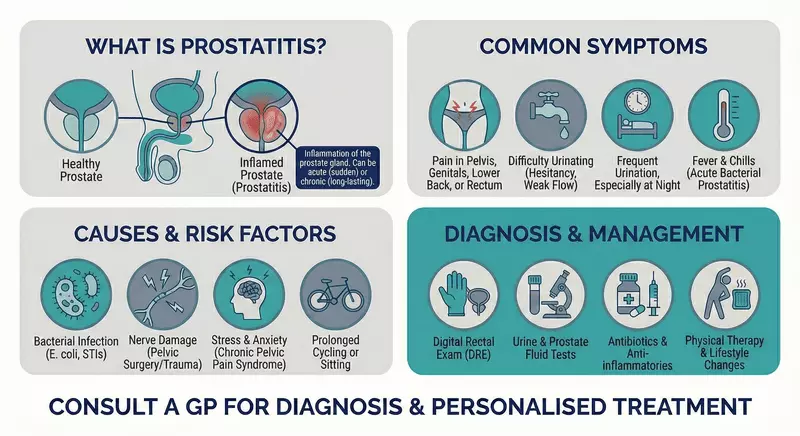
Prostatitis refers to inflammation of the prostate gland and can cause pain, urinary symptoms, and sexual dysfunction. It may also lead to fatigue, low mood, and reduced quality of life.
The prostate produces fluid that forms part of semen and sits just below the bladder, surrounding the urethra. When inflamed, it can affect urination, ejaculation, and pelvic comfort.
Early assessment is important to exclude infection and other underlying causes, and to reduce the risk of symptoms becoming chronic.
Understanding Prostatitis
Prostatitis can affect men of all ages. Symptoms vary widely and may be subtle, making diagnosis challenging. In some men, symptoms develop gradually and persist for months.
Common Symptoms
-
Deep pelvic or perineal discomfort, lower back pain, pain at the tip of the penis, sensitivity at the back of the legs, urinary frequency or discomfort, painful ejaculation, and a general feeling that something is “not quite right”.
Symptoms may fluctuate in severity and can significantly affect day-to-day wellbeing.
Diagnosis
Prostatitis is often a diagnosis of exclusion, meaning other causes must first be ruled out.
Assessment may include urine testing and culture to exclude infection, screening for sexually transmitted infections such as chlamydia, gonorrhoea, mycoplasma, ureaplasma, and trichomonas, and sometimes a PSA blood test. A digital rectal examination may also be performed to assess prostate size, shape, and tenderness.
Because similar symptoms can occasionally indicate more serious conditions, prompt medical review is recommended.
Types of Prostatitis
Prostatitis is generally classified into three main categories:
Acute Bacterial Prostatitis
A sudden and severe infection causes pelvic pain, urinary frequency, and often fever. This requires urgent medical treatment.
Chronic Bacterial Prostatitis
Recurrent or persistent infection with ongoing symptoms.
Chronic Non-Bacterial (Inflammatory) Prostatitis
The most common type. No clear infection is found, but inflammation and symptoms persist.
Chronic prostatitis can sometimes progress to chronic pelvic pain syndrome, which may be distressing and difficult to manage without a structured treatment plan.
Treatment
Treatment depends on the type of prostatitis identified. Even when bacteria are not detected, clinical guidelines often recommend a prolonged course of antibiotics — typically 4–6 weeks, as the prostate can be difficult for medications to penetrate.
Anti-inflammatory medication may help reduce swelling and discomfort. Good hydration and regular ejaculation can support symptom improvement.
Many men with chronic prostatitis notice triggers that worsen symptoms, such as excessive alcohol intake, prolonged sitting, dehydration, or irregular sexual activity. Identifying and managing these triggers can help reduce flare-ups.
Where stress or psychological factors contribute, particularly in chronic pelvic pain syndrome, counselling or stress-management strategies can significantly improve outcomes.
When to Seek Medical Advice
Because prostatitis symptoms can overlap with other conditions, including more serious causes, an early men’s health assessment is important. Prompt treatment improves the likelihood of recovery and reduces the risk of chronic symptoms.
Stay up to date with the latest health news and insights from around the world.
Stay up to date with the latest health news and insights from around the world. From medical breakthroughs to public health updates, we bring you trusted information to help you stay informed and make confident decisions about your health.





Our professional standards
We are an award-winning private medical clinic with a strong reputation for delivering professional, compassionate and evidence-based healthcare.
Our clinicians maintain appropriate professional registrations and memberships relevant to their roles.
Dr Wayne Cottrell, MBChB, MRCGP, is registered with the General Medical Council and is a member of the Royal College of General Practitioners and the British Association for Sexual Health and HIV (BASHH).
Our nursing team also holds relevant professional memberships, including the Royal College of Nursing (RCN).
Cyberdoc Medical Limited is registered as Dr Cottrell’s designated body for professional appraisal and revalidation.