Pubic Lice – Crabs Treatment
Pubic lice, commonly known as crabs, are a parasitic infestation that affects coarse body hair, most commonly the pubic region. Although they are often grouped with sexually transmitted infections (STIs), pubic lice are technically a parasitic condition spread primarily through close physical contact. While uncomfortable and distressing, pubic lice are treatable with the correct medication and hygiene measures. Early diagnosis prevents ongoing transmission and unnecessary discomfort.
What Are Pubic Lice?
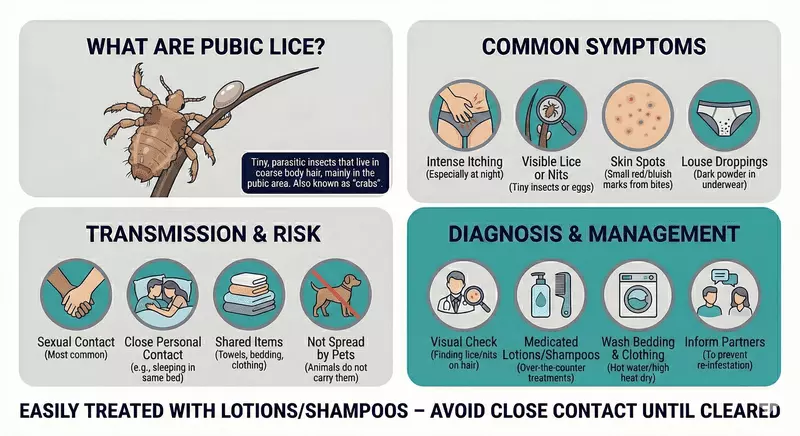
Pubic lice (Pthirus pubis) are tiny parasitic insects that live in coarse human hair. They feed on small amounts of blood from the skin and attach firmly to hair shafts.
They are called “crabs” because of their crab-like appearance under magnification.
Unlike head lice, pubic lice:
-
Prefer thicker hair
-
Move slowly
-
Do not jump or fly
They survive by remaining close to the skin and cannot live long away from the human body.
How Are Pubic Lice Spread?
Pubic lice are passed on through close skin-to-skin contact, most commonly during sexual activity. They can also spread through:
-
Sharing bedding
-
Sharing towels
-
Close household contact
-
Sleeping in the same bed
Transmission through toilet seats or casual contact is extremely unlikely, as lice cannot survive long away from the body.
Because spread usually involves intimate contact, we often recommend screening for other STIs when pubic lice are diagnosed.
How Long After Contact Do Symptoms Appear?
Symptoms typically begin around one week after contact, although they can take slightly longer in some individuals.
You may carry pubic lice and pass them on before noticing symptoms.
Symptoms of Pubic Lice
The main symptom is intense itching, particularly in the pubic region. The itching often becomes worse at night.
Other possible signs include:
-
Visible lice or eggs (nits) attached to hair
-
Small red or blue spots on the skin
-
Skin irritation from scratching
-
Dark specks in underwear (lice droppings)
Although pubic lice most commonly affect the pubic area, they can also be found in:
-
Underarm hair
-
Chest hair
-
Beard
-
Eyebrows or eyelashes (rare, more common in children)
Persistent scratching may lead to secondary skin infection.
Diagnosis
Pubic lice are usually diagnosed by clinical examination. A doctor may identify:
-
Adult lice
-
Nits attached to hair shafts
-
Characteristic rash pattern
Unlike some STIs, blood tests are not required to confirm pubic lice. However, if transmission was sexual, additional STI screening may be recommended.
Because other skin conditions can cause itching, professional assessment ensures accurate diagnosis and appropriate treatment.
Treatment for Pubic Lice
Pubic lice are treated with medicated topical treatments, usually containing permethrin or malathion. Although often referred to as “medicated shampoo,” the product must be applied correctly to the affected areas, not simply washed through the hair.
Treatment Instructions
The lotion or cream should be applied to:
-
All affected hair
-
Surrounding coarse hair
-
Underarm or chest hair, if involved
The medication is left on for the recommended time before washing off.
A second treatment is usually required 7 days later to ensure any newly hatched lice are eliminated.
It is important that:
-
Sexual partners are treated at the same time
-
Household members are assessed if symptomatic
-
Treatment instructions are followed precisely
Failure to treat contacts often results in reinfection.
Washing Clothes and Bedding
Because lice can survive briefly off the body, environmental cleaning is important.
You should:
-
Wash all clothing, bedding, and towels used in the previous 2–3 days at 60°C or above
-
Tumble dry on a high heat if possible
-
Seal non-washable items in a plastic bag for at least 72 hours
There is no need to fumigate rooms or use insecticide sprays on furniture.
These measures significantly reduce the risk of recurrence.
Ongoing Itching After Treatment
Itching may continue for several days after treatment, even when lice have been eradicated. This is due to ongoing skin irritation and immune response.
However, if live lice are still visible after 7–10 days, reassessment is required.
Persistent symptoms may indicate:
-
Incorrect application
-
Reinfection from an untreated partner
-
Misdiagnosis
Complications
Pubic lice themselves do not transmit systemic disease. However, complications can include:
-
Secondary bacterial infection from scratching
-
Skin inflammation
-
Ongoing transmission to partners
The psychological distress associated with a diagnosis can also be significant, particularly when linked to sexual contact.
Prompt treatment prevents these complications.
Is Pubic Lice an STI?
Pubic lice are not classified strictly as a sexually transmitted infection, but sexual contact is the most common route of transmission.
For this reason, a diagnosis of pubic lice may prompt:
-
Full STI screening
-
Partner notification advice
-
Discussion around safer sexual practices
This ensures comprehensive sexual health care.
When Should You Seek Medical Advice?
You should book an appointment if:
-
You have persistent itching in the pubic region
-
A partner has been diagnosed
-
You notice visible lice or eggs
-
Symptoms are affecting sleep or daily life
Early treatment reduces discomfort and prevents spread.
Confidential Sexual Health Care in Canary Wharf
Pubic lice are common and treatable. While the condition can feel embarrassing, it is simply a parasitic infestation that responds well to appropriate medication.
At our private clinic in Canary Wharf, we provide:
-
Discreet assessment
-
Same-day treatment
-
Partner advice
-
STI screening if required
-
Clear written treatment guidance
Our approach is calm, professional, and non-judgmental.
Protecting Your Sexual Health
Pubic lice are easily treated when diagnosed promptly. Regular sexual health screening, open communication with partners, and early medical advice help maintain long-term wellbeing.
If you are concerned about pubic lice (crabs) or any other sexual health condition, a confidential assessment is available.
Stay up to date with the latest health news and insights from around the world.
Stay up to date with the latest health news and insights from around the world. From medical breakthroughs to public health updates, we bring you trusted information to help you stay informed and make confident decisions about your health.



Our professional standards
We are an award-winning private medical clinic with a strong reputation for delivering professional, compassionate and evidence-based healthcare.
Our clinicians maintain appropriate professional registrations and memberships relevant to their roles.
Dr Wayne Cottrell, MBChB, MRCGP, is registered with the General Medical Council and is a member of the Royal College of General Practitioners and the British Association for Sexual Health and HIV (BASHH).
Our nursing team also holds relevant professional memberships, including the Royal College of Nursing (RCN).
Cyberdoc Medical Limited is registered as Dr Cottrell’s designated body for professional appraisal and revalidation.