
Thrush (Candida Infection)
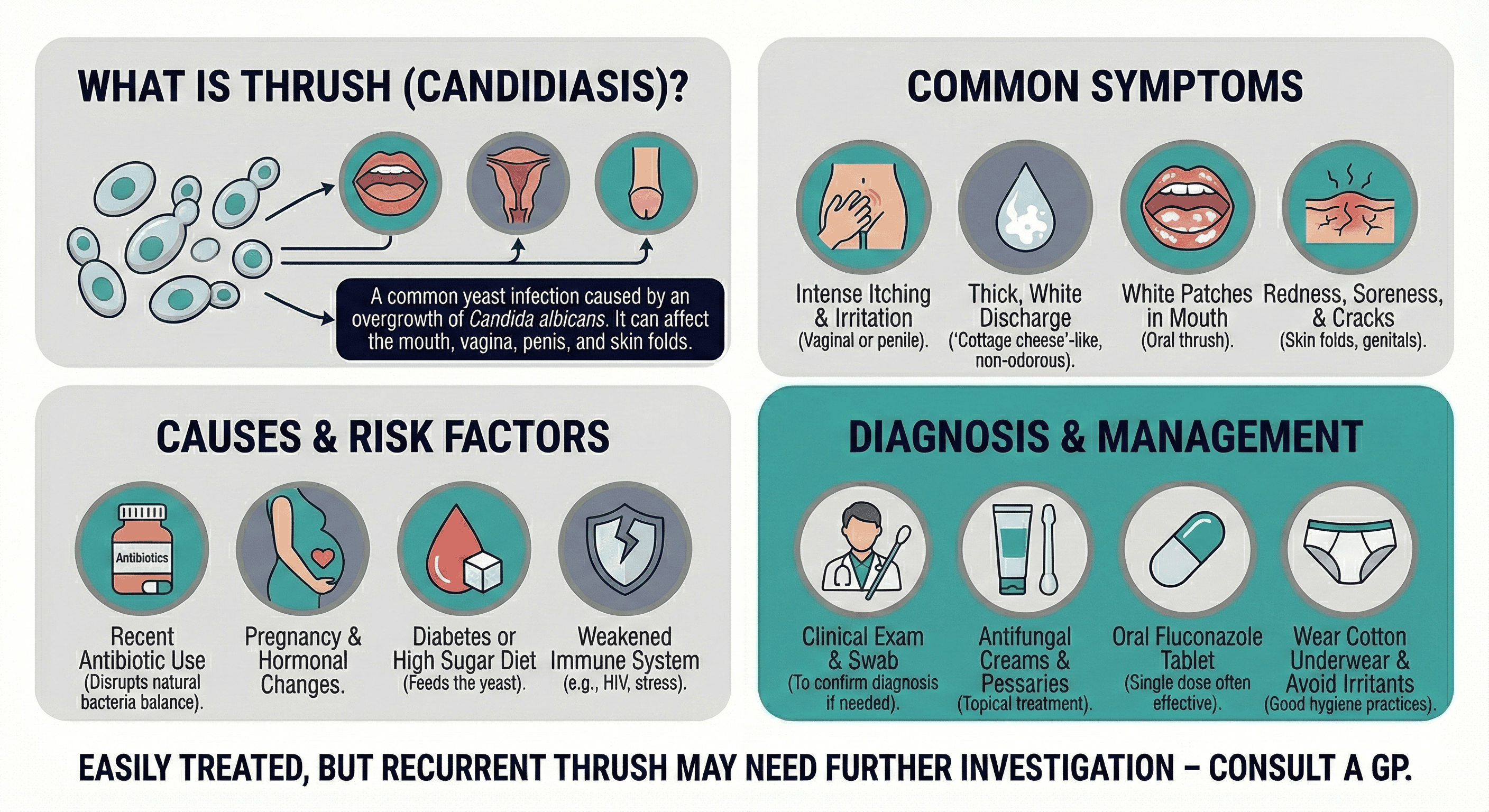
Thrush is a common fungal infection caused by an overgrowth of Candida albicans, a yeast that normally lives harmlessly in the vagina and on the skin. Changes in the vaginal environment can allow it to multiply and cause symptoms.
It is more common in women, but men can also be affected. Thrush is not classed as a sexually transmitted infection (STI) and can occur without sexual contact. Most women will have at least one episode, and a small number experience recurrent infections, which may prompt checks for underlying factors such as diabetes.
Why Thrush Develops
The vagina normally maintains a delicate balance between protective bacteria and naturally occurring yeast. When this balance is disrupted — for example by antibiotics, hormonal changes, or irritation — yeast can overgrow and cause inflammation.
In men, irritation under the foreskin, poor hygiene, or underlying health conditions may increase susceptibility.
Risk Factors
Certain factors increase the likelihood of developing thrush:
- Recent antibiotic use, hormonal contraception (including the combined oral contraceptive pill), increased sexual activity, pregnancy, poorly controlled diabetes, and immune suppression.
Antibiotics are a particularly common trigger because they reduce protective vaginal bacteria, allowing yeast to flourish.
Symptoms
Symptoms can vary in severity and may develop gradually or suddenly.
Women
Vaginal itching, irritation or soreness; thick white discharge (often described as “cottage cheese” in appearance); discomfort during urination; and pain during sexual intercourse.
Men
Redness or small red spots on the head of the penis; itching or irritation; swelling; and increased smegma (white discharge beneath the foreskin).
Symptoms in men are often milder but can still cause significant discomfort.
Diagnosis
Thrush is often diagnosed based on symptoms and examination. In uncertain or recurrent cases, a swab may be taken to confirm the presence of Candida and exclude other infections, particularly sexually transmitted infections with similar symptoms.
Treatment
Thrush is usually straightforward to treat with antifungal medication, available as oral tablets, vaginal pessaries, or topical creams.
Symptoms often improve within a few days of starting treatment. In recurrent cases, a longer course of antifungal therapy may be required. Where relevant, underlying triggers such as diabetes or antibiotic use should be addressed.
If both partners have symptoms, simultaneous treatment may help reduce reinfection.
When to Seek Medical Advice
You should seek medical review if:
- Symptoms are severe or recurrent
- This is your first episode
- Symptoms do not improve with treatment
- You are unsure whether it is thrush or another infection
Because other conditions can mimic thrush, proper assessment ensures accurate diagnosis and effective treatment.
Supporting Long-Term Vaginal and Genital Health
Maintaining good genital hygiene, avoiding irritants (such as perfumed soaps or harsh products), wearing breathable underwear, and managing underlying health conditions can reduce recurrence risk.
If you experience repeated episodes, a personalised assessment can help identify contributing factors and provide a structured sexual health management plan.
Stay up to date with the latest health news and insights from around the world.
Stay up to date with the latest health news and insights from around the world. From medical breakthroughs to public health updates, we bring you trusted information to help you stay informed and make confident decisions about your health.





Our professional standards
We are an award-winning private medical clinic with a strong reputation for delivering professional, compassionate and evidence-based healthcare.
Our clinicians maintain appropriate professional registrations and memberships relevant to their roles.
Dr Wayne Cottrell, MBChB, MRCGP, is registered with the General Medical Council and is a member of the Royal College of General Practitioners and the British Association for Sexual Health and HIV (BASHH).
Our nursing team also holds relevant professional memberships, including the Royal College of Nursing (RCN).
Cyberdoc Medical Limited is registered as Dr Cottrell’s designated body for professional appraisal and revalidation.