
Prostate Cancer
Prostate conditions are common, particularly as men get older, and are often manageable when identified early. At our clinic, we provide discreet, evidence-based assessment for urinary symptoms, prostate enlargement, and prostate cancer risk.
If you are unsure about your symptoms or concerned about screening, we can arrange appropriate testing, explain your results clearly, and discuss the next appropriate steps with you.
The Prostate Gland
The prostate gland is a small, walnut-sized gland found in men that plays an essential role in the production of semen. It sits just below the bladder, surrounding the urethra, the tube that carries urine from the bladder out through the penis.
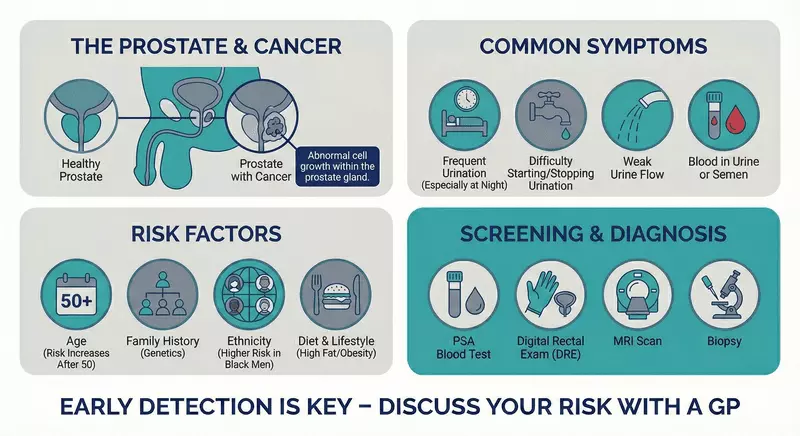
It is normal for the prostate to enlarge with age. This non-cancerous enlargement is known as benign prostatic hyperplasia (BPH). As the gland grows, it can press against the bladder and urethra, leading to urinary symptoms such as increased frequency, getting up at night to pass urine (nocturia), a weak urinary stream, and dribbling.
BPH is very common in men over 50 and is usually manageable and not life-threatening.
Prostate Cancer
Prostate cancer is the most common cancer affecting men in the UK, with approximately 36,000 new diagnoses each year — accounting for around 25% of all newly diagnosed male cancers. Most cases occur in men aged 70 or older.
Risk varies by ethnicity. Prostate cancer is more common in men of African-Caribbean or African descent and less common in men of Asian descent.
Symptoms
In its early stages, prostate cancer often causes no symptoms. When symptoms do occur, they may include:
- Frequent urination (especially at night), difficulty starting or stopping urine flow, weak stream or dribbling, and persistent lower back pain.
Because these symptoms can also be caused by benign conditions such as BPH, proper medical assessment is essential.
Screening and Early Detection
Early detection significantly improves treatment outcomes.
The primary screening blood test is PSA (prostate-specific antigen). While PSA testing is helpful, it cannot diagnose prostate cancer on its own. An elevated PSA level may indicate cancer, but it can also be raised for non-cancerous reasons.
For this reason, we recommend combining a PSA blood test with a digital rectal examination (DRE). During this examination, the prostate is assessed for enlargement, irregularity, or hardness. These tests are often performed annually in men over 50, or earlier in higher-risk individuals.
For patients requiring more advanced assessment, I also offer the PCA3 gene test, which is a more specific test for prostate cancer.
Prognosis and Treatment
Prostate cancer often progresses slowly, and the overall outlook is generally favourable. Many men live for decades without symptoms or requiring treatment. In fact, many men die with prostate cancer rather than from it.
When detected early, prostate cancer can often be cured. Treatment options may include surgical removal of the prostate, radiotherapy, or hormone therapy. In selected cases, active surveillance may be appropriate.
However, some forms of prostate cancer are more aggressive, can occur at a younger age, and may progress rapidly.
If prostate cancer spreads (metastasises), most commonly to the bones, it is no longer curable. Approximately 10,000 men in the UK die from prostate cancer each year.
Take Control of Your Health
A simple blood test combined with a physical examination can be life-saving. Do not let embarrassment delay you from seeking medical advice. Getting a men’s health assessment provides reassurance, clarity, and, when necessary, timely treatment.
Stay up to date with the latest health news and insights from around the world.
Stay up to date with the latest health news and insights from around the world. From medical breakthroughs to public health updates, we bring you trusted information to help you stay informed and make confident decisions about your health.





Our professional standards
We are an award-winning private medical clinic with a strong reputation for delivering professional, compassionate and evidence-based healthcare.
Our clinicians maintain appropriate professional registrations and memberships relevant to their roles.
Dr Wayne Cottrell, MBChB, MRCGP, is registered with the General Medical Council and is a member of the Royal College of General Practitioners and the British Association for Sexual Health and HIV (BASHH).
Our nursing team also holds relevant professional memberships, including the Royal College of Nursing (RCN).
Cyberdoc Medical Limited is registered as Dr Cottrell’s designated body for professional appraisal and revalidation.