Genital Warts Treatment
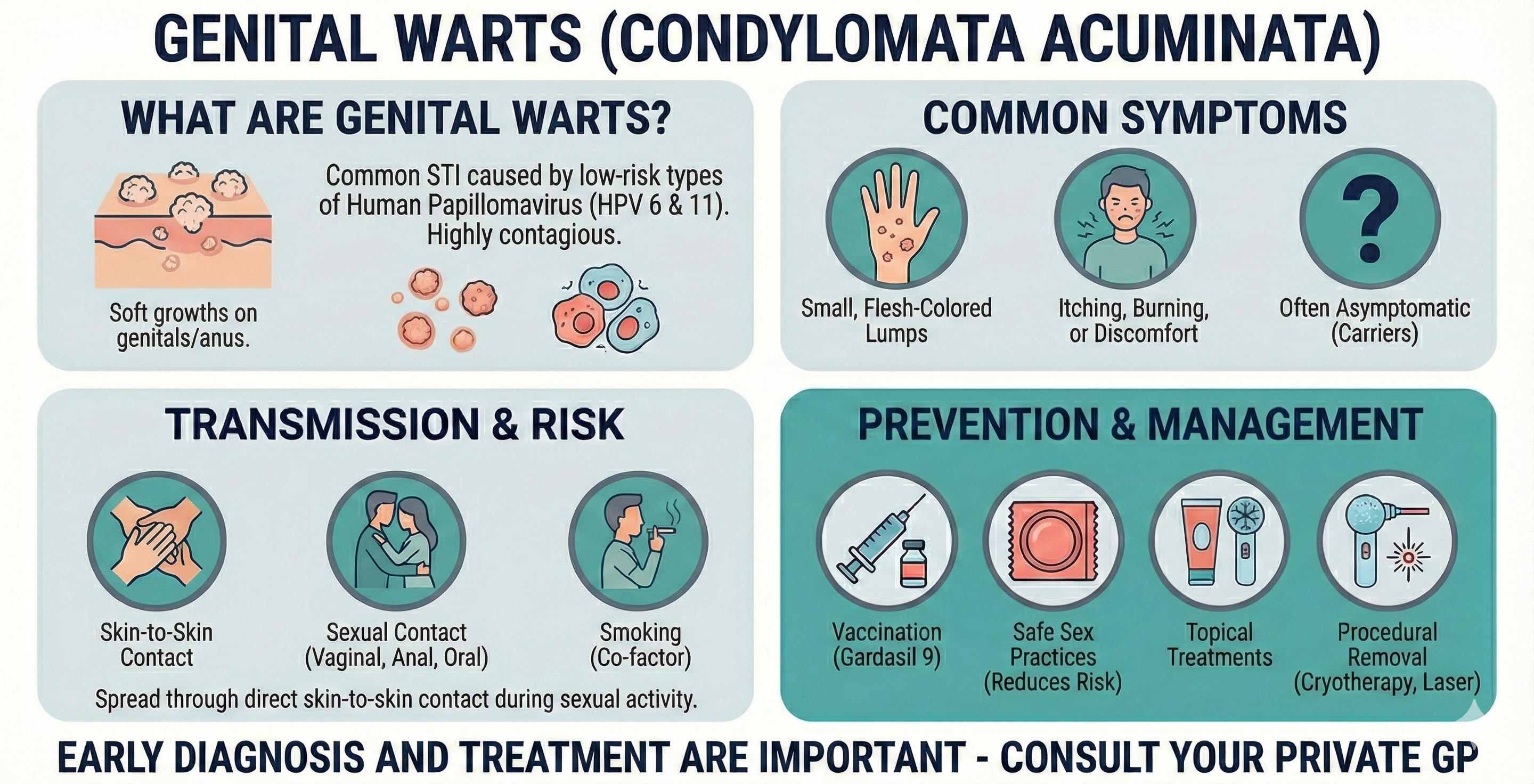
Genital warts are caused by low-risk strains of the Human Papillomavirus (HPV), most commonly HPV types 6 and 11. These strains do not cause cancer, but they are highly infectious and can spread easily through close sexual contact.
Although genital warts are usually harmless from a medical perspective, they can be distressing, uncomfortable, and cosmetically concerning. Early diagnosis and appropriate treatment help reduce spread and improve confidence.
What Causes Genital Warts?
Genital warts are caused by low-risk HPV strains, primarily:
-
HPV 6
-
HPV 11
These strains are responsible for the majority of visible genital wart infections.
Transmission occurs through:
-
Genital-to-genital contact
-
Vaginal or anal intercourse
-
Oral-genital contact
Because HPV spreads through skin-to-skin contact rather than bodily fluids, condoms reduce but do not eliminate transmission risk.
Genital warts are highly infectious, particularly when visible lesions are present.
Are Genital Warts Serious?
Genital warts:
-
Are unsightly and infectious
-
Rarely cause serious health problems
-
Are not linked to cancer
However, they can:
-
Multiply if untreated
-
Spread to partners
-
Causes psychological distress
-
Occasionally cause irritation or discomfort
Prompt treatment improves cosmetic appearance and reduces viral spread.
Symptoms of Genital Warts
Genital warts often appear weeks to months after exposure.
Typical features include:
-
Painless, flesh-coloured growths
-
Single lesions or clusters
-
Flat or raised bumps
-
Small cauliflower-like formations
They may appear on:
-
Penis
-
Vulva
-
Vaginal walls
-
Perineum
-
Anus
-
Groin
-
Thighs
Some patients also experience:
-
Itching
-
Mild irritation
-
Local discomfort
Many people have no other symptoms.
Diagnosis
Genital warts are usually diagnosed by visual inspection during a clinical examination.
Because they have a characteristic appearance, further testing is often unnecessary.
However, if there is uncertainty, we can:
-
Perform HPV swab testing
-
Assess for co-existing sexually transmitted infections
-
Conduct additional screening if clinically indicated
Assessment may involve:
-
External genital examination
-
Speculum examination (in women)
-
Proctoscopy (if anal involvement is suspected)
Accurate diagnosis ensures appropriate treatment.
Treatment of Genital Warts
Most treatments remove the wart but do not necessarily eradicate the HPV virus itself. The immune system is ultimately responsible for clearing the infection over time.
Treatment options include:
Cryotherapy (Freezing)
Cryotherapy is my preferred method of treatment.
This involves applying liquid nitrogen to freeze the wart tissue. It is:
-
Quick
-
Effective
-
Performed in clinic
-
Suitable for most wart types
Multiple sessions are usually required.
I recommend leaving no longer than two weeks between treatments for best results.
Some temporary redness, blistering, or irritation is expected after treatment.
There is a small risk of scarring, particularly with repeated treatments.
Topical Acid Treatments
Certain acid-based treatments can be applied directly to the wart.
These treatments:
-
Destroy wart tissue gradually
-
May require repeated application
-
Can sometimes be self-applied at home under guidance
These are often suitable for smaller lesions.
Immune-Modulating Cream
An immune-modulating topical cream can stimulate the body’s immune response against HPV.
This option:
-
Is applied at home
-
May take several weeks
-
Can cause local skin irritation
It may be appropriate for patients with multiple or recurrent lesions.
Choosing the Right Treatment
During your first consultation, we will:
-
Assess the size and number of lesions
-
Consider location
-
Review previous treatments
-
Discuss side effects
-
Explore your preferences
There is no single “best” treatment for every patient. Decisions are individualised.
Do Genital Warts Come Back?
Yes, recurrence is possible.
Because treatment removes visible lesions rather than the underlying virus, warts may reappear while the immune system is still clearing HPV.
Recurrence is more common in the first few months after treatment.
The majority of people eventually clear the virus naturally within 1–2 years.
Reducing Transmission
While warts are present, the transmission risk is higher.
To reduce spread:
-
Avoid sexual contact while lesions are active
-
Use barrier protection
-
Inform sexual partners
-
Complete treatment course
HPV vaccination also significantly reduces the risk of acquiring strains that cause genital warts.
HPV Vaccination and Genital Warts
Modern HPV vaccines protect against:
-
HPV 6 and 11 (wart-causing strains)
-
HPV 16 and 18 (cancer-associated strains)
Vaccination is recommended for sexually active adults who have not yet been immunised.
Even after a wart diagnosis, vaccination may help protect against other HPV strains.
When Should You Seek Medical Advice?
You should arrange an appointment if you notice:
-
New flesh-coloured growths
-
Clusters of small bumps in the genital area
-
Anal or perineal lesions
-
Persistent itching or irritation
Early treatment prevents the spread and reduces anxiety.
Confidential Genital Wart Treatment in Canary Wharf
At our private clinic in Canary Wharf, we provide:
-
Rapid diagnosis
-
Cryotherapy treatment
-
Home treatment guidance
-
HPV vaccination
-
Comprehensive STI screening
-
Follow-up appointments
Our care is discreet, professional, and non-judgmental.
Protecting Your Sexual Health
Genital warts are common and treatable. Although rarely medically serious, they can cause understandable concern.
Prompt assessment, appropriate treatment, and vaccination help reduce recurrence and protect long-term sexual health.
If you are concerned about possible genital warts, confidential appointments are available.
Stay up to date with the latest health news and insights from around the world.
Stay up to date with the latest health news and insights from around the world. From medical breakthroughs to public health updates, we bring you trusted information to help you stay informed and make confident decisions about your health.




Our professional standards
We are an award-winning private medical clinic with a strong reputation for delivering professional, compassionate and evidence-based healthcare.
Our clinicians maintain appropriate professional registrations and memberships relevant to their roles.
Dr Wayne Cottrell, MBChB, MRCGP, is registered with the General Medical Council and is a member of the Royal College of General Practitioners and the British Association for Sexual Health and HIV (BASHH).
Our nursing team also holds relevant professional memberships, including the Royal College of Nursing (RCN).
Cyberdoc Medical Limited is registered as Dr Cottrell’s designated body for professional appraisal and revalidation.