Mycoplasma Genitalium (Mgen)
Mycoplasma genitalium (Mgen) is a sexually transmitted bacterium that has become increasingly recognised as an important cause of genital infection. It can cause non-specific urethritis (NSU) in men and pelvic inflammatory disease (PID) in women.
Studies suggest that up to 1 in 100 sexually active adults may carry the infection, often without knowing it. Because symptoms are frequently mild or absent, Mgen can remain undiagnosed and continue to spread.
Testing for Mycoplasma genitalium is now routinely included in all of our comprehensive sexual health screens.
What Is Mycoplasma Genitalium?
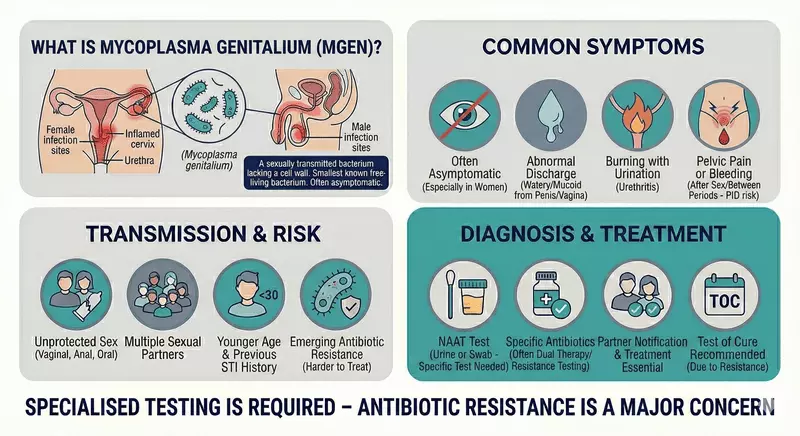
Mycoplasma genitalium is a small bacterium that infects the urinary and reproductive tract. Unlike many other bacteria, it does not have a cell wall, which makes it naturally resistant to certain common antibiotics.
It is primarily transmitted through unprotected penetrative sex, including vaginal and anal intercourse.
Over the past decade, Mgen has become more clinically significant due to:
-
Rising antibiotic resistance
-
Increasing awareness
-
Association with reproductive complications
Early detection is important.
How Is Mgen Transmitted?
Transmission occurs through:
-
Vaginal intercourse
-
Anal intercourse
-
Genital-to-genital contact
It is less commonly transmitted through oral sex.
Because many people have no symptoms, it is often passed unknowingly between partners.
Symptoms of Mycoplasma Genitalium
Most individuals with Mgen are asymptomatic.
When symptoms do occur, they may resemble other STIs.
In Men
-
Burning or pain when urinating (dysuria)
-
Clear or cloudy penile discharge
-
Urethral discomfort
-
Pain in the testes
-
Prostatitis-type symptoms
Mgen is now recognised as a major cause of persistent or recurrent NSU (non-specific urethritis).
In Women
-
Vaginal discharge
-
Lower abdominal pain
-
Pain during intercourse
-
Intermenstrual bleeding
-
Bleeding after sex
Because symptoms can be subtle, infection may go undetected without screening.
Rectal Infection
In cases of anal exposure, symptoms may include:
-
Anal pain
-
Rectal discharge
-
Irritation
Rectal infection may also be asymptomatic.
Complications of Untreated Mgen
If left untreated, Mycoplasma genitalium can lead to significant complications.
In Women
-
Pelvic inflammatory disease (PID)
-
Recurrent miscarriage
-
Preterm birth
Chronic inflammation of the reproductive tract increases the risk of long-term reproductive damage.
In Men
-
Epididymitis
-
Balanoposthitis
Persistent inflammation may cause ongoing discomfort and urinary symptoms.
Increased HIV Risk
Mgen infection is associated with approximately double the risk of acquiring HIV, likely due to mucosal inflammation increasing susceptibility.
This makes accurate testing and treatment particularly important in higher-risk sexual networks.
Testing for Mycoplasma Genitalium
Diagnosis requires PCR testing, as standard STI screens may not detect it unless specifically included.
We perform:
-
First-catch urine PCR (men)
-
Vaginal or cervical swabs (women)
-
Rectal swabs when indicated
-
Semen testing in certain clinical contexts
Importantly, we also perform resistance testing to determine whether the strain carries genetic mutations associated with antibiotic resistance.
This is crucial because Mgen has developed significant resistance to commonly used antibiotics.
Treatment for Mycoplasma Genitalium
Treatment involves targeted oral antibiotics, which are dispensed on-site.
Because resistance is common:
-
Treatment may involve a staged antibiotic approach
-
Multiple rounds may be required
-
Different antibiotic classes may be necessary
Empirical single-dose therapy is often ineffective, which is why resistance-guided treatment is essential.
Abstinence and Partner Management
To prevent reinfection and ongoing transmission:
-
Abstain from sexual contact until at least 2 weeks after completing treatment
-
Ensure all recent partners are tested and treated
Reinfection is common if partners are not treated simultaneously.
Test of Cure
We strongly recommend a test of cure at least 3 weeks after completing antibiotics.
This confirms:
-
Eradication of infection
-
Effectiveness of the antibiotic regimen
-
No persistent resistant strain
Follow-up testing is particularly important due to rising antibiotic resistance rates.
Recurrent or Persistent Infection
Persistent symptoms may result from:
-
Antibiotic resistance
-
Reinfection
-
Co-infection with other organisms
In these cases, we may:
-
Repeat resistance testing
-
Adjust antibiotic therapy
-
Screen for other STIs
-
Evaluate for prostatitis or PID
Careful management improves outcomes and reduces long-term complications.
Why Routine Screening Matters
Because Mgen is often silent but can cause reproductive harm, inclusion in routine STI screening is increasingly considered best practice — particularly in patients with:
-
Recurrent urethritis
-
PID
-
Unexplained fertility issues
-
High-risk sexual exposure
Routine screening supports early intervention.
Confidential Mgen Care in Canary Wharf
At our private clinic in Canary Wharf, we provide:
-
PCR testing with resistance analysis
-
Comprehensive STI screening
-
On-site antibiotic treatment
-
Partner management advice
-
Follow-up test of cure
-
Fertility-related assessment when required
Our approach is discreet, evidence-based, and aligned with current guidelines for sexual health.
Protecting Your Long-Term Reproductive Health
Mycoplasma genitalium is increasingly recognised as an important STI. Although often asymptomatic, it can cause urethritis, PID, and reproductive complications if untreated.
Early diagnosis, resistance-guided treatment, and proper follow-up are essential for protecting both individual and partner health.
If you have symptoms, recurrent NSU, unexplained pelvic pain, or concerns about exposure, confidential sexual health testing is available.
Stay up to date with the latest health news and insights from around the world.
Stay up to date with the latest health news and insights from around the world. From medical breakthroughs to public health updates, we bring you trusted information to help you stay informed and make confident decisions about your health.





Our professional standards
We are an award-winning private medical clinic, recognised for our outstanding reputation in delivering professional, compassionate, and evidence-based healthcare. All our doctors and nurses are fully registered with the appropriate regulatory bodies, including the GMC and RCN, and our clinical team undergoes rigorous annual appraisals to maintain the highest standards of care.
Dr Wayne Cottrell, MBChB, MRCGP, is fully registered with the General Medical Council (GMC), Health Professions Council of South Africa (HPCSA), a member of the Royal College of General Practitioners ( RCGP), and the British Association for Sexual Health and HIV (BASHH), reflecting his ongoing commitment to clinical eCyberdoc Medical Limited, which is registered as a Designated Body







How To Find Us
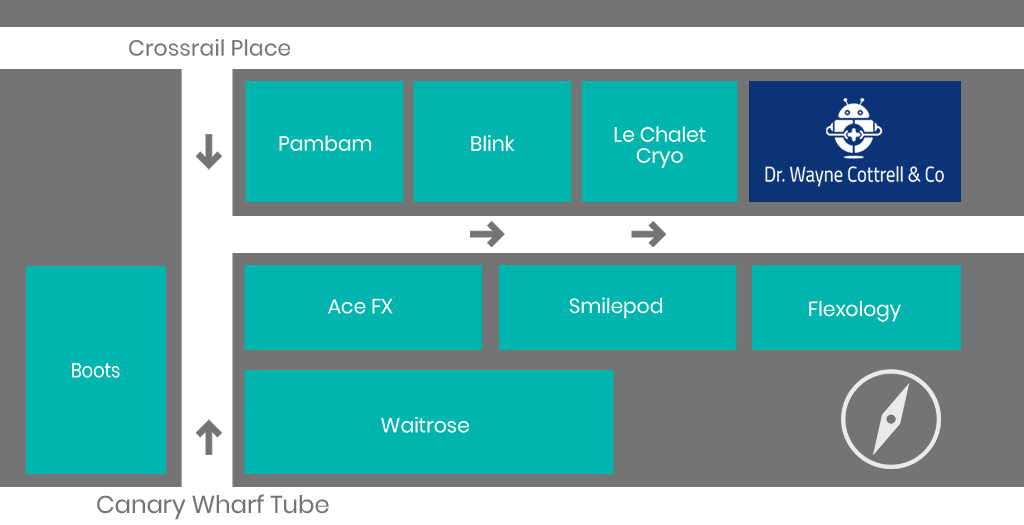
Canada Place Shopping Mall