
Ureaplasma Urealyticum Testing & Treatment
Ureaplasma urealyticum is a common bacterium found in the genital tract of many healthy men and women. It often lives harmlessly as part of the normal bacterial balance, but if that balance is disrupted, it can multiply and cause symptoms.
It isn’t always classed as a traditional STI, but it can be passed on through penetrative sex and may contribute to urethritis, vaginal symptoms, prostatitis, and occasionally fertility concerns. The key is knowing when it’s simply present and when it needs treatment.
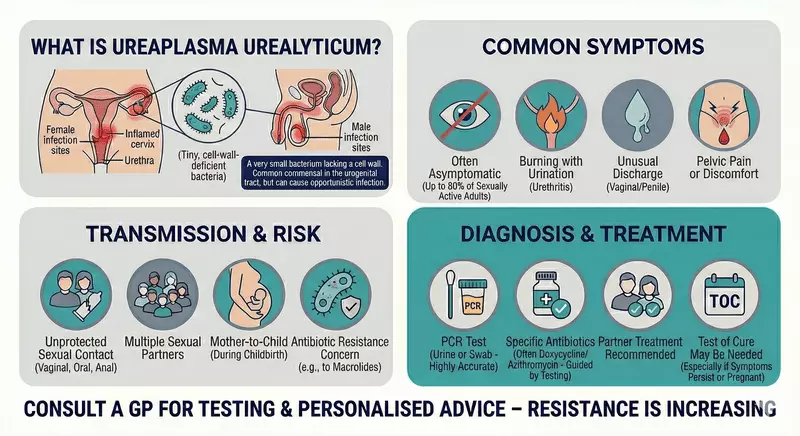
What Is Ureaplasma Urealyticum?
Ureaplasma is part of a group of bacteria known as mycoplasmas, which are unique because they lack a cell wall. This makes them naturally resistant to certain antibiotics and requires specific treatment.
It is frequently detected in the genital tracts of sexually active adults without causing symptoms. For this reason, it is considered part of the “normal flora” in many individuals.
Problems arise when:
-
The bacterial balance is disrupted
-
The organism multiplies excessively
-
It triggers inflammation
In these cases, symptoms can develop.
How Is Ureaplasma Transmitted?
Ureaplasma can be transmitted through:
-
Vaginal intercourse
-
Anal intercourse
-
Close genital contact
It can also be passed from mother to baby during childbirth.
Because it can be asymptomatic, transmission may occur unknowingly.
Symptoms of Ureaplasma
Many people with Ureaplasma have no symptoms at all.
When symptoms occur, they may resemble other STIs or inflammatory conditions.
In Men
-
Painful or burning urination (dysuria)
-
Clear urethral discharge
-
Urethral discomfort
-
Symptoms similar to prostatitis
Ureaplasma is sometimes identified in cases of non-gonococcal urethritis (NGU).
In Women
-
Increased vaginal discharge
-
Pelvic discomfort
-
Dysuria
-
Irritation
Because symptoms overlap with those of other infections, such as chlamydia or bacterial vaginosis, testing is important for an accurate diagnosis.
Ureaplasma and Fertility
There is ongoing research into the relationship between Ureaplasma and fertility.
In some cases, Ureaplasma has been associated with:
-
Reduced sperm quality
-
Sperm motility issues
-
Chronic prostatitis
-
Pelvic inflammatory changes
While many carriers have no fertility issues, in cases of unexplained infertility or recurrent symptoms, screening may be appropriate.
Ureaplasma in Pregnancy
Ureaplasma can be passed from mother to baby during birth.
Some studies suggest a possible association with:
-
Preterm birth
-
Low birth weight
-
Pregnancy complications
However, not all colonisation requires treatment during pregnancy. Clinical context is important, and decisions are individualised.
When Should You Test for Ureaplasma?
Testing may be appropriate if you have:
-
Persistent urethritis with negative standard STI tests
-
Recurrent NGU
-
Prostatitis symptoms
-
Unexplained fertility issues
-
Persistent vaginal symptoms
-
A partner diagnosed with Ureaplasma
Routine screening in asymptomatic individuals is not always necessary, but assessment can be tailored to individual circumstances.
Testing for Ureaplasma Urealyticum
Diagnosis requires PCR testing, as standard urine tests may not detect it reliably.
Testing may involve:
-
First-catch urine sample
-
Semen sample (in men with fertility concerns)
-
Vaginal or cervical swab
PCR (Polymerase Chain Reaction) testing is highly sensitive and can accurately detect the organism.
Because Ureaplasma can exist as normal flora, results must be interpreted in the context of symptoms.
Treatment for Ureaplasma
Symptomatic Ureaplasma infection is treated with oral antibiotics, which we dispense onsite.
The choice of antibiotic depends on:
-
Symptom profile
-
Resistance considerations
-
Previous antibiotic exposure
Because Ureaplasma lacks a cell wall, certain common antibiotics are ineffective, so appropriate selection is essential.
Partner Management
If Ureaplasma is considered clinically significant:
-
Sexual partners should be tested and treated
-
Sexual contact should be avoided for at least 2 weeks after treatment
-
A test of cure is recommended approximately 3 weeks after completing treatment
This reduces the risk of reinfection and persistent inflammation.
Recurrent or Persistent Symptoms
In some individuals, symptoms may persist despite treatment.
In these cases, we may:
-
Repeat PCR testing
-
Assess for co-infections (e.g., Mycoplasma genitalium)
-
Rule out prostatitis
-
Consider alternative antibiotic regimens
Persistent inflammation requires careful assessment rather than repeated empirical antibiotics.
Is Ureaplasma Always Harmful?
No. Many healthy individuals carry Ureaplasma without symptoms or consequences.
Treatment decisions depend on:
-
Symptom presence
-
Clinical findings
-
Reproductive concerns
-
Partner status
Over-treatment can disrupt normal bacterial balance, so targeted management is important.
Confidential Ureaplasma Care in Canary Wharf
At our private clinic in Canary Wharf, we provide:
-
PCR testing for Ureaplasma
-
Comprehensive STI screening
-
Fertility-related assessment
-
On-site antibiotic treatment
-
Follow-up test of cure
Our approach is evidence-based and individualised.
Protecting Your Long-Term Urogenital Health
Ureaplasma urealyticum is common and often harmless, but when it causes inflammation, prompt treatment helps prevent complications such as chronic urethritis, prostatitis, or fertility issues.
If you are experiencing persistent urinary or genital symptoms, a confidential sexual health assessment is available.
Stay up to date with the latest health news and insights from around the world.
Stay up to date with the latest health news and insights from around the world. From medical breakthroughs to public health updates, we bring you trusted information to help you stay informed and make confident decisions about your health.





Our professional standards
We are an award-winning private medical clinic with a strong reputation for delivering professional, compassionate and evidence-based healthcare.
Our clinicians maintain appropriate professional registrations and memberships relevant to their roles.
Dr Wayne Cottrell, MBChB, MRCGP, is registered with the General Medical Council and is a member of the Royal College of General Practitioners and the British Association for Sexual Health and HIV (BASHH).
Our nursing team also holds relevant professional memberships, including the Royal College of Nursing (RCN).
Cyberdoc Medical Limited is registered as Dr Cottrell’s designated body for professional appraisal and revalidation.